


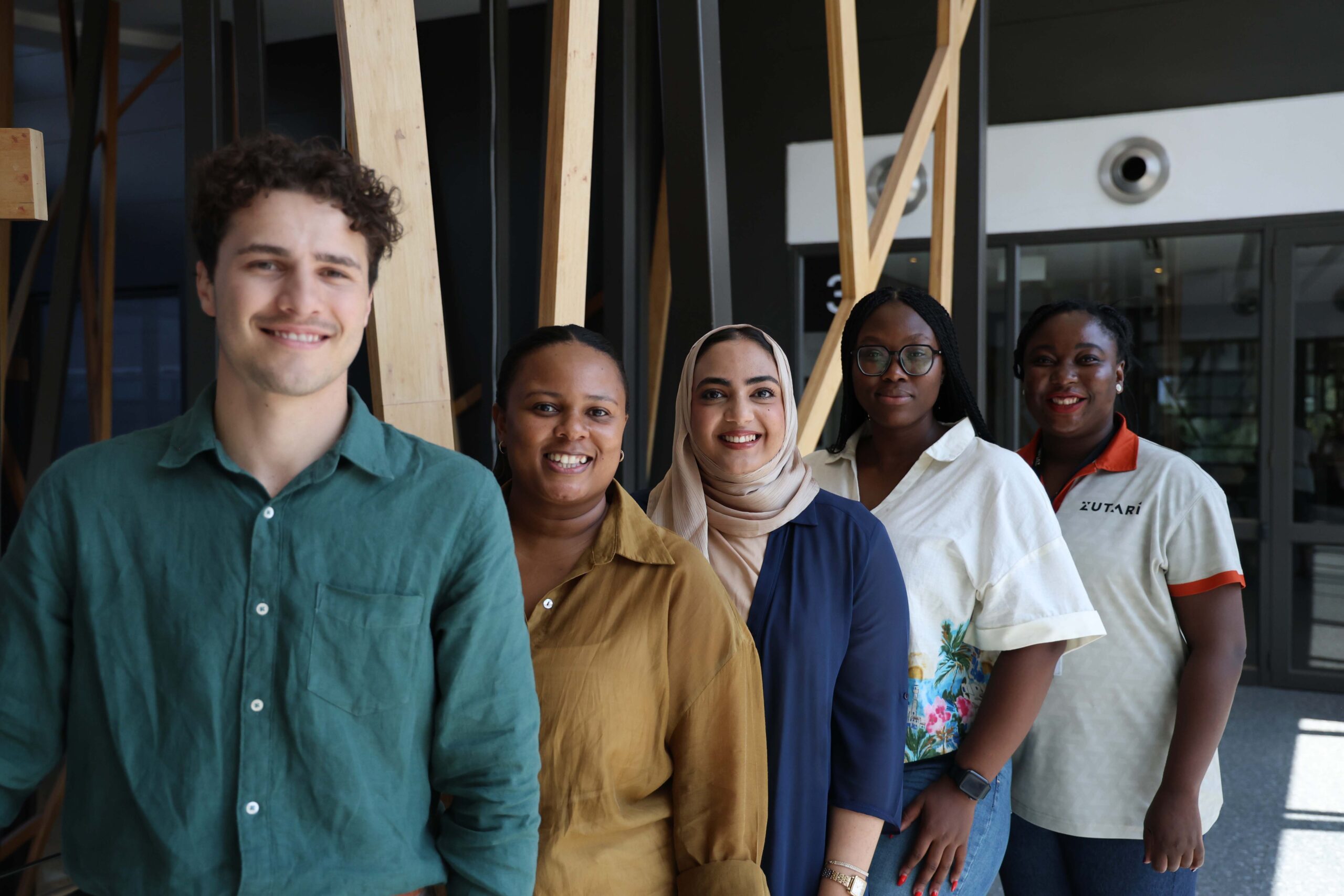

Stacy Kebler said, “I prefer being a small fish in a big pond.”
I agree with that mentality because that means there is always room to grow and there are bigger fish to look up to. Being a young engineer in a corporate setting has taught me to soak up knowledge from more experienced engineers around me, ask questions and create meaningful connections.
There are two perspectives: the first is feeling intimidated and ill-equipped to tackle the challenges on your plate, and the second is a keen spirit to learn and grow, while embracing that you have much to learn. Take my advice and choose the second.
In the professional space, everyone has their own tasks and responsibilities and seldom have the capacity to notice if a young engineer in the team is struggling. This is why it is so important to be proactive and upfront. Give the task in front of you your best shot, then if you are stuck, ask for help.
The industry is constantly evolving to keep up with the fast-paced and ever-growing digital world. This makes resilience your most valuable skill. Do not be afraid to learn new software, methods and strategies. This will only add value to your career and ensure that you work in the most efficient way possible.
Engineering does not only require technical knowledge. Soft skills such as communication, time management, emotional intelligence and leadership will take you a long way. These soft skills are essential to becoming a successful young professional. You should be confident in your work but also remain humble and know that you always have something to learn. Leadership is not a trait that everyone naturally possesses, but if you do, then it is a bonus, and you should use it to your advantage. A leader cares for and guides those who look to them.
Collaboration is a key aspect of engineering. We do not work in silos. Our individual or team efforts are combined with other discipline efforts to provide a solution to a client. Therefore, it is important to learn to work well with others. The first feature to ensure this is a success is communication. This seems like a basic people skill, yet it is still an issue in the industry. Understanding how your part fits into the bigger project benefits you and your co-workers, because if you understand the overlap in the Venn diagram of the team, you will be able to better communicate within the team.
The second feature is a strong work ethic. You should carry out your tasks in a clear manner. It is best practice to design and analyse according to the latest published version of the code, and all your calculations should reference the code. In addition, you should work in a way that another team member can pick up your tasks where you left off, since your work has a clear structure. Everything is clearly set out, including assumptions, methodology and references.
At Zutari, we are obligated to follow a folder structure with naming conventions for this reason. I have also found it helpful to use a Notes app such as OneNote to keep track of all the details and tasks about each project, so that if I need to refer back to something from a previous project that I worked on, I can find all the information I am looking for in one place rather than manually looking through journals or pages. A bonus feature of this is that a notes app is searchable.
Engineering is a demanding field, but it is also rewarding. No matter which disciplines you are working in, there will be times when the project timelines are tight, and you are pushed to perform under pressure. View this as an opportunity and a healthy challenge rather than developing a resentful, stressed attitude. It is good to plan and foresee the possible risks or issues that you may encounter, and maybe have a plan in mind for how you will handle the issue if it comes to that; however, there may be times when you will experience a sudden setback or a change in plan while you are halfway through your chosen plan. What will matter most is how you deal with this. You need to become comfortable with change and the unknown. You need to think on your feet and turn a negative into a positive. The result will always be worthwhile because your work creates a lasting impact on society. This mindset will produce a resilient character.
Zutari has 6 codes, one of which is to do the right thing. As a young professional, it can be daunting to admit you have made an error, especially if that has a larger consequence; however, it will be an even larger consequence if you ignore it. Doing the right thing can also mean obeying the company code of conduct and ethics and possibly speaking up to your seniors if you are asked to do something that violates the code. This takes a sound character, which makes for a successful young engineer. Once you build credibility, you become recognised and respected as a young professional.
Another one of our codes is to own it, get it done. This may sound like a tick-box exercise, but it is much deeper than that. Performing your job to the best of your ability, ensuring that all loose ends are tied up, and going the extra mile when required are all a testament to your credibility. You need to be proud of the work you submit, which means taking full responsibility for the quality you output and consistently meeting your deadlines.
In conclusion, your perspective and ability to adapt to change are key to becoming a resilient young professional. Put your hand up when opportunities arise, be hungry for growth and take control of your own career path because no one is going to map it out for you. Create connections, collaborate well with your team and take accountability for the quality of the work you do. One day, you will find yourself passionate about your work. Since you spend most of your day working, you should make sure you love what you do and have a positive outlook on your job.

