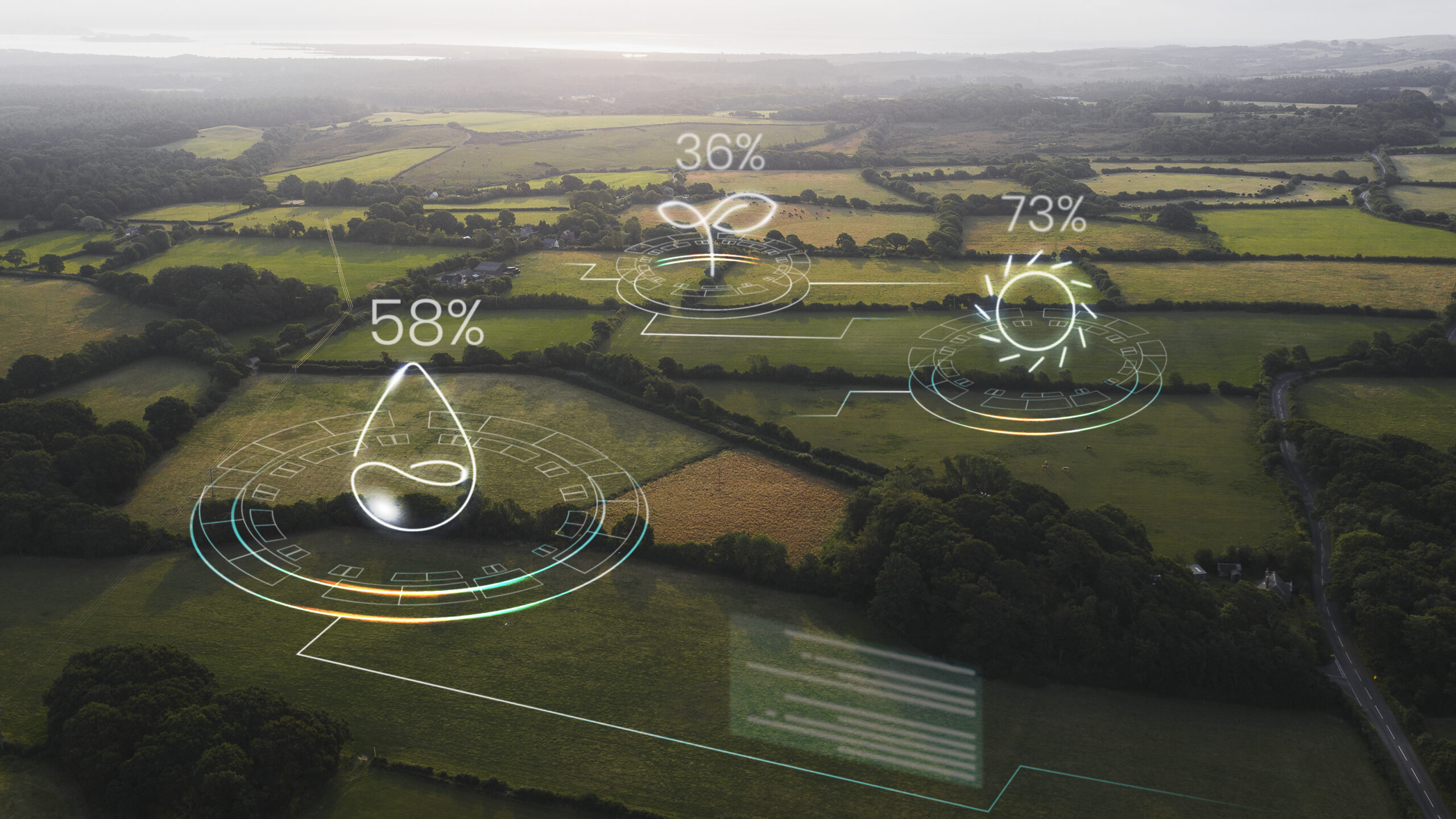

The Built Environment sector increasingly recognises that sustainability must be embedded from the earliest stages of a project. Decisions made during planning and design will shape long-term environmental, social, economic, and operational outcomes.
While systems thinking is widely acknowledged as essential to sustainability and circularity, it often remains an aspiration rather than a practical decision-making discipline. As a result, sustainability risks are becoming a reporting exercise or compliance requirement rather than a driver of better infrastructure outcomes.
This is often due to sustainability principles being applied primarily at a technical level rather than at a systemic level.
Systems thinking shifts the focus from optimising individual assets to strengthening the wider systems in which those assets operate. It requires decision-makers to consider interdependencies, trade-offs, long-term consequences, and resilience across environmental, social, economic, and institutional dimensions. Yet systems thinking only creates value when it informs practical decisions. The critical question is therefore not whether sustainability matters, but what sustainable decision-making requires in practice.
Visible Sustainability vs Sustainable Outcomes
The challenge is not a lack of sustainability ambition. The challenge is that many sustainability efforts remain focused on individual project metrics rather than long-term system outcomes.
The industry understands that sustainability extends beyond compliance. However, there remains a significant distinction between sustainability as reporting, branding, and mitigation, and sustainability as genuine system-wide value creation.
Many projects achieve sustainability targets without necessarily delivering sustainable outcomes. Carbon reductions, certification ratings, and reporting metrics remain important, but they do not automatically create lasting value.
Examples of visible sustainability that do not necessarily result in sustainable outcomes include:
· A low-carbon asset that is unaffordable to operate and maintain.
· A water intervention that ignores catchment degradation.
· A technically sophisticated project with no realistic maintenance model.
These initiatives may perform well against individual
metrics while failing to strengthen the broader system on which long-term
success depends.These initiatives may perform well against individual
metrics while failing to strengthen the broader system on which long-term
success depends.
Defining True Sustainability
True sustainability is rarely a win-win in every dimension.
Low-carbon solutions may require greater capital investment. Resilient
infrastructure may increase upfront costs. Ecosystem protection may constrain
land-use opportunities. Inclusion may require different service models.
Short-term affordability may conflict with long-term durability.
The reality is that sustainability is not the absence of
trade-offs; it is the intelligent management of them. Systems thinking does not
remove complexity. It makes complexity visible early enough to manage it
responsibly.
At Zutari, we increasingly see that the most sustainable
solution is not always the most obvious one. It is often the solution that best
balances competing priorities while strengthening the resilience of the wider
system over time.
This responsibility extends beyond project delivery and
construction completion. Sustainability must be considered across the full
lifecycle of an asset, bringing resilience to the forefront of decision-making.
Long-term sustainability depends on whether assets remain
resilient, maintainable, and valuable throughout their lifecycle. This requires
consideration of multiple dimensions of resilience, including:
· Climate resilience
· Operational resilience
· Financial resilience
· Social resilience
· Governance resilience
A solution is not truly sustainable if it performs only
under expected conditions and fails under stress. Climate shocks,
infrastructure stress, institutional weakness, demographic change, fiscal
pressure, and uncertain future demand are all factors that can influence a
project’s resilience and long-term value.
The Six Dimensions of Sustainable Value
True sustainability requires consideration of six interconnected dimensions. A project should be:
· Environmentally sound
· Socially just
· Economically viable
· Institutionally supportable
· Resilient under stress
· Beneficial at the system level, not only at the asset level
Failure in any one of these dimensions can undermine sustainability outcomes across the wider system.

A Decision Framework for Sustainable Infrastructure
For executives, asset owners, planners, and project teams, the following questions provide a practical framework for evaluating whether a decision contributes to long-term system value:
- What wider system does this project influence?
- What root cause is being solved?
- What trade-offs are created and how will they be managed?
- Who benefits, and who bears the risk over time?
- Can the solution be operated, governed, and adapted locally?
- What happens under stress, disruption, or climate change?
Sustainability becomes meaningful when infrastructure decisions strengthen the wider system over time, not just the asset, not just the business case, and not just today’s performance metrics.

Measuring What Matters
What gets measured influences what gets prioritised. If organisations continue to focus primarily on delivery outputs, they risk overlooking the system outcomes that determine long-term sustainability.
To operationalise this framework, project teams must measure outcomes that reflect long-term system performance rather than short-term delivery metrics.
While certain sustainability indicators are measured at an organisational level, project teams also need measures that assess the sustainability and resilience of individual projects throughout their lifecycle.
Although priorities may vary by project, these measures may include:
- Whole-life carbon
- Whole-life cost
- Resilience under stress
- Reliability and downtime
- Access and inclusion outcomes
- Biodiversity and ecological condition
- Institutional readiness
- Maintenance affordability
- Local economic benefit
If we measure outputs alone, we optimise assets. If we measure outcomes, we strengthen systems. The difference between the two is the difference between visible sustainability and true sustainability.

Resilience as the Ultimate Test
Resilience testing should be incorporated into the design process because it demonstrates whether sustainability claims hold under real-world conditions.
Projects should be tested against questions such as:
- Will the system continue to function under climate shocks?
- Can it adapt to changing demand over time?
- Can institutions afford to operate and maintain it?
- Can communities rely on it during disruption?
The answers to these questions provide one of the clearest indicators of whether a project is genuinely sustainable.
Why This Matters for Africa
Nowhere is the need for systems thinking more apparent than in Africa, where infrastructure projects often operate within highly interconnected social, environmental, and economic systems.
Projects often operate in contexts characterised by service backlogs, fiscal constraints, rapid urbanisation, climate vulnerability, informal growth, and varying institutional capacity.
In these environments, optimising a single asset is rarely sufficient. Long-term success depends on strengthening the broader systems that support communities, economies, and ecosystems.
Across Africa, infrastructure decisions must therefore consider not only what is being built, but how those investments contribute to resilience, inclusion, economic development, and environmental stewardship over time.
Across Zutari, our sustainability leaders, engineers, planners, and environmental practitioners are applying these principles to help clients navigate increasingly complex decisions. Whether addressing climate resilience, water security, energy transitions, mobility, or social infrastructure, the focus remains the same: delivering outcomes that strengthen systems rather than simply optimising individual assets.
The projects featured alongside this article illustrate how systems thinking can guide decision-making throughout the project lifecycle, helping organisations balance competing priorities, manage uncertainty, and create lasting value.
These examples demonstrate that systems-based sustainability is not a theoretical aspiration. It is an achievable and practical approach when embedded into decision-making from project inception and supported by deliberate measurement, resilience testing, and system-wide evaluation.
Conclusion
The future of infrastructure will not be defined solely by how efficiently assets are delivered, but by how effectively systems continue to function under uncertainty.
As climate pressures, resource constraints, and societal expectations intensify, sustainability cannot be measured solely by individual project outputs.
True sustainability is achieved when infrastructure strengthens environmental, social, economic, and institutional systems over time. This requires a shift from isolated project optimisation towards resilient, adaptive, system-wide value creation supported by the discipline of systems thinking and tested through resilience.
The organisations that succeed in the coming decades will be those that move beyond measuring sustainability as a project outcome and begin using it as a decision-making discipline. Sustainability is not achieved when assets perform well in isolation. It is achieved when the systems that support people, communities, economies, and ecosystems continue to thrive long after project delivery.