


When I began my career as a bridge engineer, I naturally measured success in terms of forces, stresses, and whether a design could be built safely. Those questions still matter, but working at Zutari has broadened my view of what a bridge is meant to achieve. I now see a bridge as a form of certainty: it allows a truck to leave knowing it can reach the next market, a learner to reach school, a patient to reach healthcare and a community to remain connected when conditions change. The concrete and steel create the crossing; dependable movement creates economic value.
This distinction matters particularly in Southern Africa. Our economies are linked by long transport corridors that cross rivers, mountains and sparsely populated areas. A single weak link can undermine hundreds of kilometres of otherwise serviceable road. In that sense, a bridge is never just a structure at one point on a map. It is a hinge in a much larger system of trade, mobility, public services and regional cooperation.
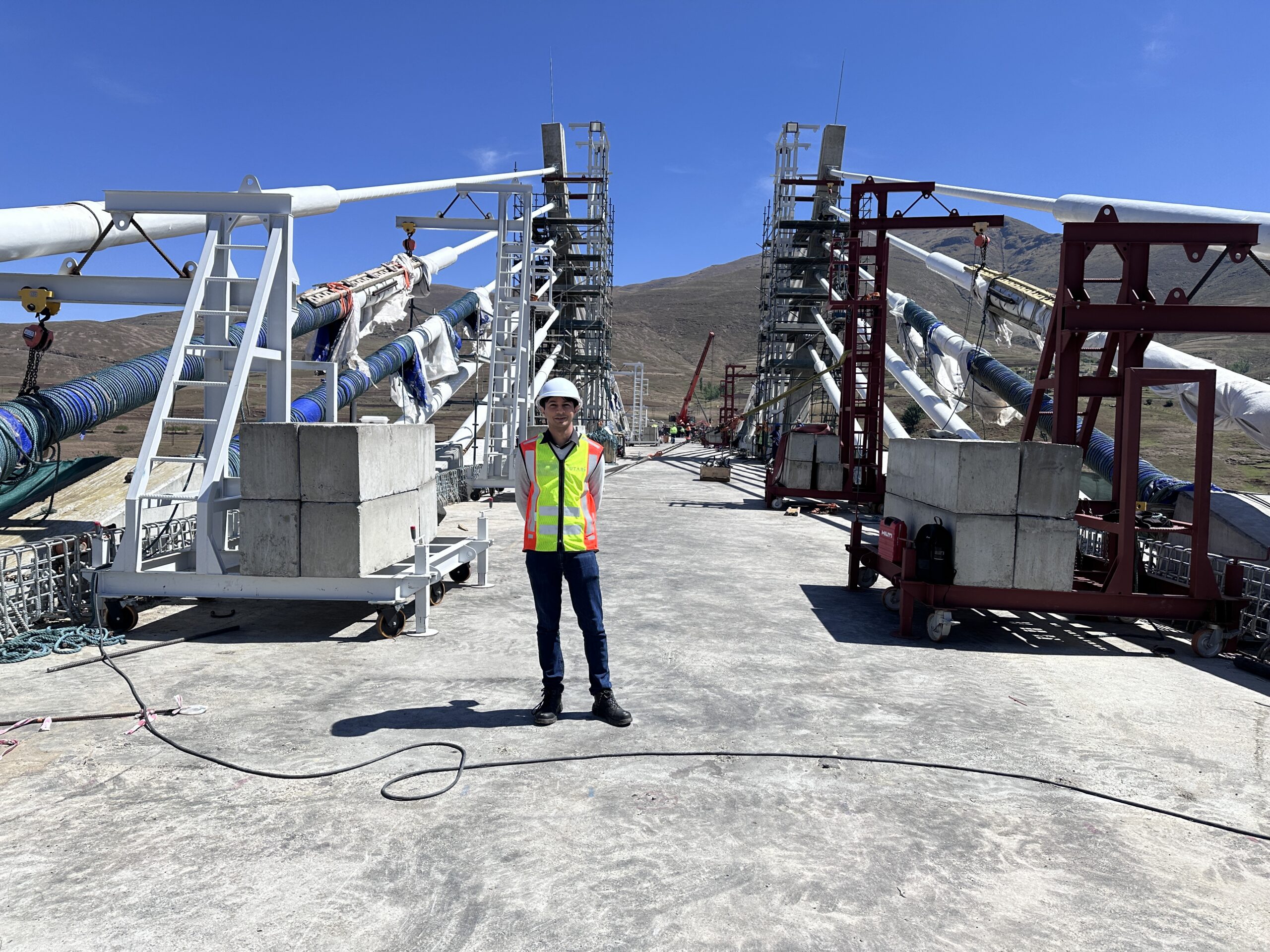
Senqu Bridge in Lesotho has brought those ideas together for me. Zutari led the design and construction supervision of the 825 m incrementally launched extradosed bridge, which forms part of the A1 nati Since joining Zutari in 2018, my own role has moved beyond analysing individual structural components. I have worked through design, staged modelling, construction support, monitoring, and the coordination needed between bridge engineering, roads, geotechnical, environmental, health and safety, contract and project management teams. This progression has taught me that technical excellence in one discipline is only part of the answer. A bridge creates value when the construction sequence is practical, risks are understood, decisions are made in a timely manner, and the people who will operate the asset are part of the conversation.
onal route. When the Polihali Reservoir is impounded, sections of the existing road will be submerged, therefore the bridge is a fundamental aspect in achieving maintained access for communities and economic activity. It also sits within the wider Lesotho Highlands Water Project, where a local transport connection and a regional water-security programme intersect. It is difficult to work on a project like this and still think of a bridge as an isolated object.
The site makes every decision consequential. The bridge crosses a deep, remote, high-altitude valley with difficult access, slender piers and large temperature variations. Launching the deck from both abutments allowed much of the work to take place in controlled casting yards instead of relying on extensive construction from the valley floor. Delivering that sequence required detailed, staged analysis, close site support, and constant collaboration between the client, designer, contractor and specialists. For me, this was where analysis stopped being an output and became an active part of construction: our models had to help the team make safe, practical decisions as the structure changed stage by stage.
My research and project work in structural health monitoring have deepened that lesson. On Senqu Bridge, monitoring has allowed us to compare measured behaviour with analytical predictions during construction, including the effects of temperature, prestress and the evolving structural system. The technology is valuable, but the real value lies in the conversation it enables. When site measurements, engineering judgement and the design model are considered together, the team can identify differences early and respond with greater confidence. The same principle extends into operation: good data can help an owner understand deterioration, target inspections and maintenance, and act before a small issue becomes a disruptive closure.
That is where bridge engineering and economics meet. The cost of unreliable infrastructure is rarely confined to the asset owner. A closure or load restriction can disrupt supply chains, lengthen journeys, increase vehicle operating costs and isolate communities. Conversely, a bridge that remains available and predictable creates value quietly, every day. Its best performance may be almost invisible: goods keep moving, people keep arriving, and businesses can make commitments with confidence.
These experiences have led me to three practical convictions.
- First, we should define success at the corridor level. The bridge, its approach roads, drainage, utilities, maintenance access and operating arrangements must work as a single system. This is where Zutari’s multidisciplinary way of working matters: choices made in one part of a project inevitably affect the others. Optimising the structure while neglecting its interfaces can leave the real bottleneck untouched.
- Second, whole-life value must carry more weight than the lowest initial cost. Climate pressures, heavier demand and constrained maintenance budgets mean that resilience, inspectability, durability and repairability are economic design criteria. Spending wisely at the beginning can preserve mobility for decades and avoid far higher costs later.
- Third, durable connections depend on human capability as much as physical capacity. As my role has grown to include mentoring candidate engineers and supporting younger members of our bridge team, I have become more conscious that capability is also infrastructure. Complex projects depend on people who can question assumptions, communicate across disciplines and carry knowledge from design into construction and operation. Creating space for younger engineers to take responsibility, while giving them the support to learn safely, strengthens both the project in front of us and the projects that will follow.
The connection between research and practice is equally important to me. Questions from the site make research more useful, while research gives project teams better ways to test assumptions and understand performance. Structural health monitoring is one example, but the principle is wider: innovation earns its place when it improves a real decision. The goal is not a more impressive model or a larger volume of data. It is a safer construction sequence, a clearer maintenance priority or greater confidence in the continued service of the asset.
I am optimistic about the richer models, connected assets, and better data now becoming part of engineering practice. I have seen how digital workflows can make complex analysis more transparent and help teams compare predictions with what is happening on site. Used well, these tools can detect emerging risks and direct limited maintenance funds to where they create the greatest value. Used without a clear purpose, they can add complexity without improving outcomes. The test is whether the technology helps someone make a better, earlier or more confident decision.
When I look at a bridge now, I still appreciate the forces, materials and construction sequence. However, my journey at Zutari has taught me to see the chain of consequences beyond its abutments: the disciplines that must work together, the decisions that will shape its reliability, the people who will sustain it and the communities whose plans depend on it. A bridge can protect access, reduce uncertainty and strengthen a corridor. The concrete and steel create the crossing. Reliability, integration and sustained opportunity are what turn it into infrastructure that truly connects economies.

