


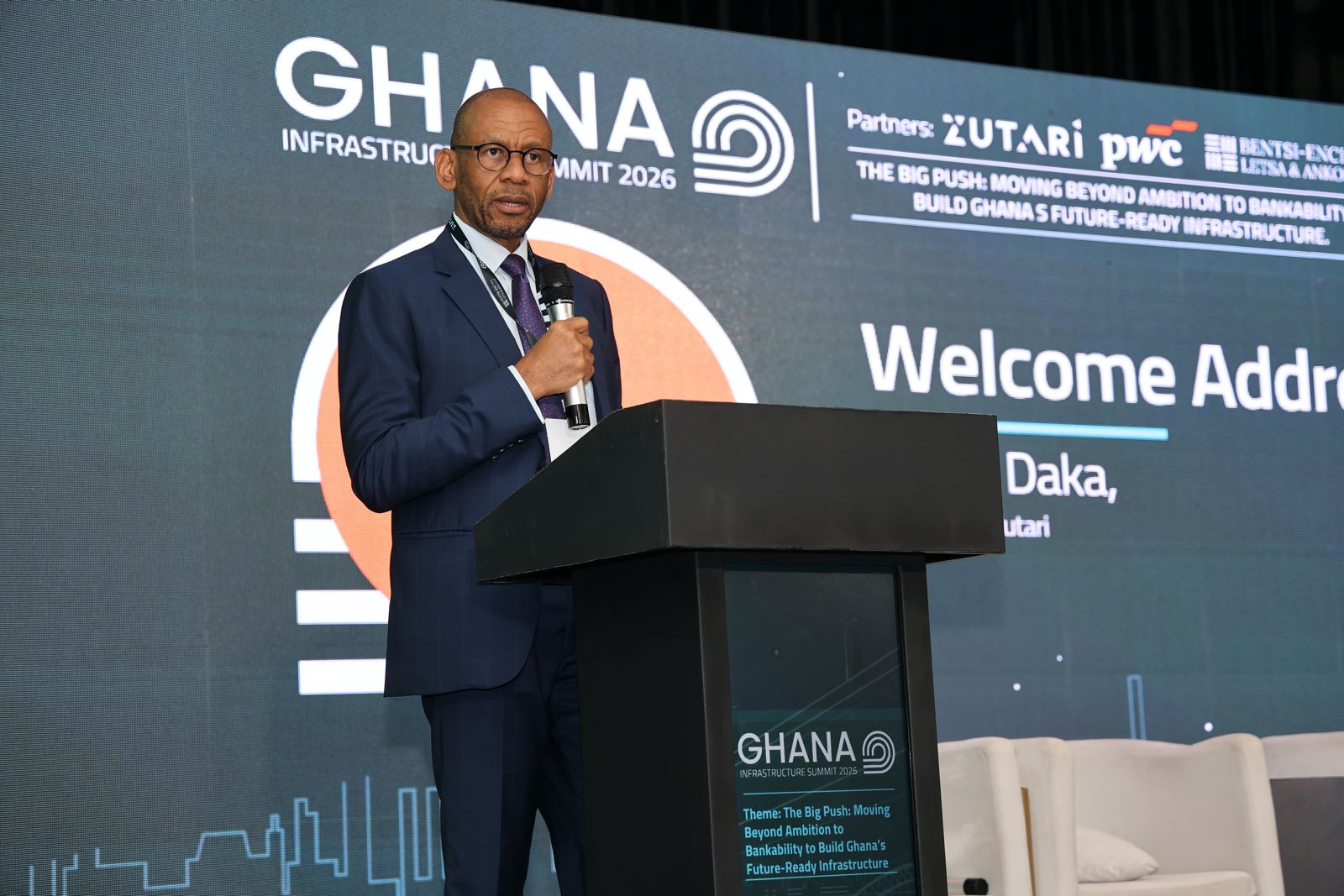
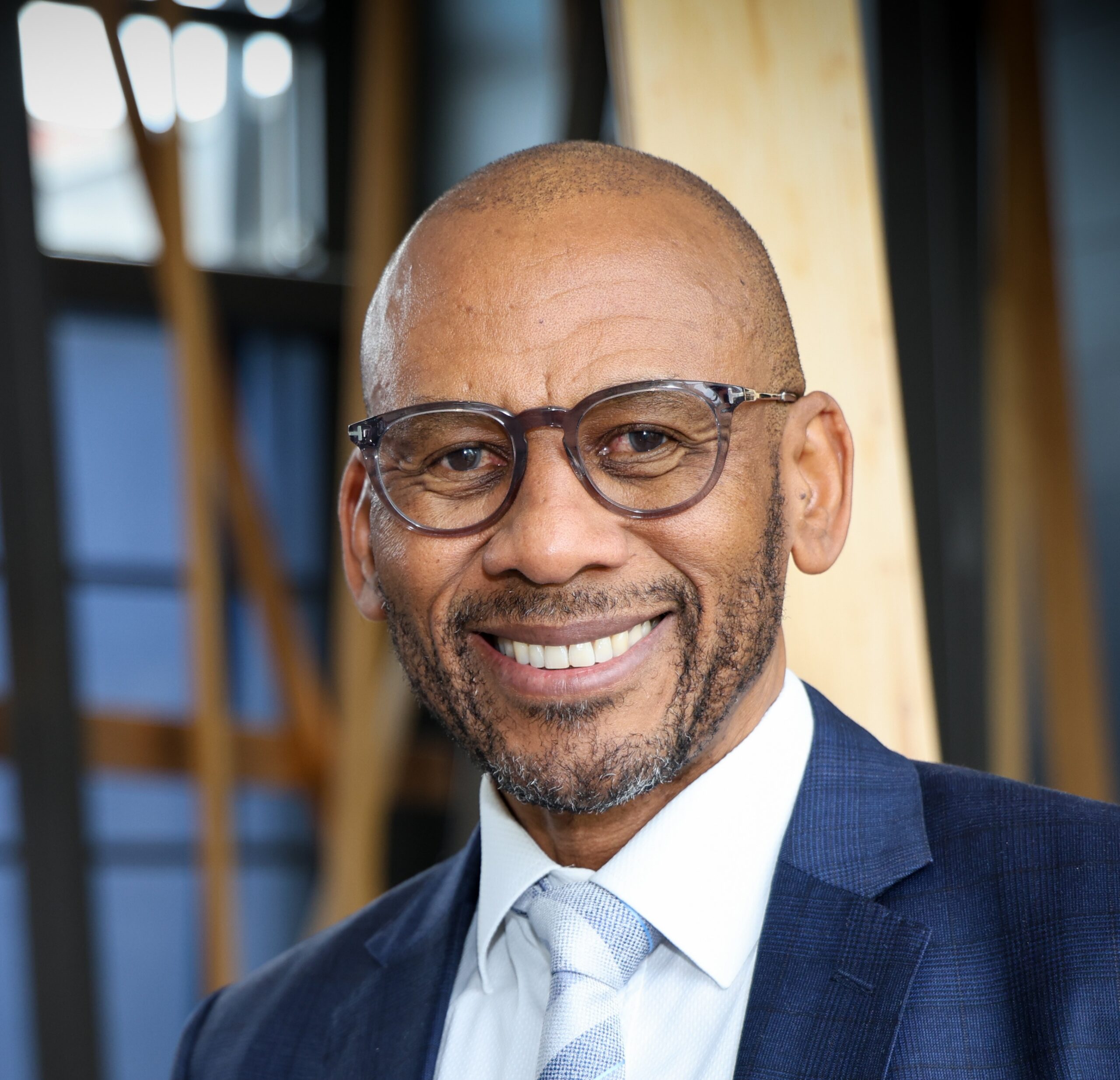
Teddy Daka | Group Chief Executive Officer, Zutari
Honourable Ministers, senior government officials, distinguished representatives of public institutions, development finance institutions, investors, business leaders, fellow professionals, ladies and gentlemen.
Good morning.
On behalf of Zutari and our partners, PwC and Bentsi-Enchill, Letsa & Ankomah, it gives me great pleasure to welcome you to the Ghana Infrastructure Summit 2026.
Thank you for joining us.
We have brought together representatives of government, finance, engineering, law and business. That diversity is not accidental. It is the very reason we are here.
Because the central proposition I want to put before you this morning is simple:
Ghana’s infrastructure ambitions cannot be realised by any one institution, profession or sector acting alone.
They require us to think together, make difficult choices together and adopt a more integrated approach to infrastructure investment.
Ladies and gentlemen,
Africa is a continent of extraordinary ambition.
Across the continent, governments are pursuing industrialisation, economic diversification, regional integration, energy security and improved living standards.
We speak of creating millions of jobs, expanding manufacturing and increasing intra-African trade.
But there is a fundamental reality we cannot escape.
Africa’s ambitions can move only as fast as the infrastructure that carries them.
We cannot industrialise without reliable energy. We cannot build competitive manufacturing industries without efficient transport and logistics. And we cannot realise the promise of the African Continental Free Trade Area if goods cannot move efficiently between our countries.
Infrastructure is therefore not simply another sector competing for scarce public resources. It is the foundation of economic transformation.
For Ghana, the Big Push programme represents an important opportunity to strengthen that foundation.
But ambition alone is not enough. The challenge is ensuring that infrastructure investment translates into sustainable economic growth and lasting benefits for society.
One of the difficult realities of infrastructure development is that almost every need can legitimately be described as urgent.
A community without reliable water cannot be told that water is not a priority. A business struggling with unreliable electricity cannot be told that power infrastructure is not urgent. And a farmer unable to transport produce to market cannot be told that roads can wait.
Every one of these priorities matters.
But resources are finite.
Public finances are constrained. Private capital is selective. And the capacity to prepare and deliver projects is not unlimited.
This creates a difficult leadership challenge.
When every priority is urgent, but resources are limited, real leadership means deciding what matters most.
It means distinguishing between what is desirable and what is essential. Between projects that are attractive and investments that generate the greatest economic and social value. And between what we would like to do and what we can realistically finance, deliver and maintain.
These are not simply engineering decisions. They are economic, financial, legal and institutional decisions.
And no single institution possesses all the perspectives necessary to make them well.
This brings me to the central purpose of today’s gathering.
Infrastructure development has traditionally involved a sequence of decisions.
Government identifies a priority. Engineers develop technical solutions. Financial advisers consider funding options. Legal professionals address regulatory arrangements. Investors assess risks and returns.
Each plays an essential role.
The difficulty arises when these become separate conversations rather than interconnected decisions.
By the time a project reaches financiers, fundamental questions about affordability or risk allocation may remain unresolved.
By the time regulatory issues are understood, substantial resources may already have been committed.
The result is familiar: projects that struggle to secure financing, repeated redesigns, delays and cost escalation.
The problem is not necessarily a lack of expertise. It is that we do not always bring that expertise together when it can make the greatest difference.
The best infrastructure decisions are made when policy, capital, engineering, law and business meet before commitments are made — not after problems arise.
There is another important dimension.
Governments carry enormous responsibility for national development. They must balance competing priorities, respond to public needs and maintain fiscal discipline.
But even the best-advised government cannot consider perspectives it never hears.
That is why constructive engagement between government, business, financiers and professional advisers matters.
The private sector should not engage government only when seeking contracts. Financial institutions should not enter the conversation only when projects are ready for funding. And engineers and legal professionals should not limit their contribution to implementing decisions already taken.
We all have a responsibility to contribute our expertise earlier.
Equally, government must create opportunities for these perspectives to be heard.
This is not about transferring government’s responsibility to the private sector or allowing commercial interests to determine national priorities.
It is about improving public investment decisions through informed and constructive engagement.
Good infrastructure governance does not require everyone to agree. It requires the right questions to be asked and difficult trade-offs to be confronted.
That is the spirit in which we have convened this summit.
At Zutari, we believe engineering must play a broader role in economic development.
Here in Ghana, our local professionals are supported by the wider expertise of our business across Africa and the Middle East.
But we recognise that engineering expertise alone is insufficient.
A technically excellent project that cannot attract finance or navigate its regulatory environment will not deliver the intended benefits.
That is why our collaboration with PwC and BELA is important.
Together, we bring complementary expertise in engineering, finance, investment and law.
We have not convened this summit simply to celebrate a partnership between three professional firms. We have convened it because we believe the way infrastructure decisions are made must improve.
As we begin today’s proceedings, I would like to offer one challenge.
Let us resist the temptation to spend the day simply reaffirming what we already know.
We know Ghana needs infrastructure. We know financing is constrained. And we know partnerships are important.
The real value of today’s discussions will lie in confronting the more difficult questions.
How do we establish priorities when legitimate demands exceed available resources?
How do we ensure investments are driven by economic value rather than the visibility of individual projects?
And how do we bring policy, engineering, finance and law together early enough to make better decisions?
Our programme has been designed to encourage precisely that conversation — first examining policy and planning, and then the bankability and financing of future-ready infrastructure.
I encourage everyone to participate openly, challenge assumptions and listen to perspectives different from your own.
Because none of us sees the entire picture.
Ladies and gentlemen,
Let me conclude with this thought.
The challenge facing Ghana, and indeed much of Africa, is not a shortage of ambition.
We have ambition in abundance.
The challenge is converting that ambition into sound choices, investable programmes and infrastructure that enables our economies to grow.
And that conversion begins long before construction.
Africa’s ambitions can move only as fast as the infrastructure that carries them. But the quality of that infrastructure will ultimately depend on the quality of the decisions that precede it.
That is why we are here.
On behalf of Zutari, PwC and BELA, thank you once again for joining us.
I look forward to a day of thoughtful, candid and productive engagement.
It gives me great pleasure to welcome you formally to the Ghana Infrastructure Summit 2026.
Thank you.
Medaase.

