


Africa’s infrastructure ambition must be measured not by the scale of investment announced, but by the value people can live with.
On 6 March 2057, Ghana will celebrate 100 years of independence.
A child starting school today may then be running a factory, managing a hospital or raising a family. They will not be counting the infrastructure projects announced in 2026. Their questions will be more practical. Can I get to work? Can my business move goods? Does the electricity stay on? Is the water safe?
The measure of infrastructure is not what we build. It is what people can do because we built it.
Africa needs to accelerate infrastructure investment. Our ambitions for industrialisation, trade and better living standards depend on it. But needs are immense, budgets are constrained, and every priority competes with another.
We must therefore ask two questions together. How do we mobilise more investment? And how do we obtain more value from every investment we make?
The cost of delay is higher than the cost overrun
Ghana’s National Development Planning Commission reported that investment projects managed by ministries, departments and agencies, originally planned for two years, were taking an average of seven years and five months to complete. The finding predates Ghana’s current Big Push programme, but it illustrates an economic cost that infrastructure debates too often overlook.
A delayed road means another season of unreliable access to markets. A delayed power connection postpones investment, production and jobs. The cost is not only what a project spends. It is the value an economy cannot create while it waits.
Other African projects show what becomes possible when infrastructure and the systems around it work together.
At Kazungula, between Zambia and Botswana, border clearance in the Zambia-to-Botswana direction fell from around seven days to approximately 16 hours. Daily truck movements increased by about 54%, according to the World Trade Organization.
The bridge was essential. But concrete alone did not achieve that result. Customs procedures, officials and border operations had to work together. The economic gain was the return of time and predictability to businesses.
In Dakar, Senegal’s Regional Express Train reached 100 million cumulative passenger journeys by August 2026. These were not passenger forecasts in an investment proposal. They were journeys actually made.
Kazungula and Dakar are very different projects. Together they demonstrate something important: Africa does not lack the ability to deliver. We need to make successful delivery more consistent.
Three disciplines worth insisting upon
Choose for value. The most useful investment is not necessarily the largest or most visible. Consider Ghana’s proposed Accra–Kumasi Expressway. Its success should be measured by more reliable journeys, lower transport costs, and new economic opportunities, not simply kilometres of road. But an expressway needs feeder roads, logistics, power and functioning markets to create its full value. Plan the economic corridor, not just the road.
Prepare before spending. Establish demand. Resolve land and approvals. Test engineering options and financial risks. Decide who will operate and maintain the asset. Bankability should shape the project from the outset, not be introduced after design. Few sentences in our industry become more expensive than, “We will work that out when construction starts.”
Prove the result. A budget signals intent. Construction signals activity. An asset in reliable use delivers value. We should track that full journey and measure what improves afterward: time saved, businesses connected, electricity supplied and services sustained. This discipline must endure across changes in political administration.
Better decisions require more than one perspective
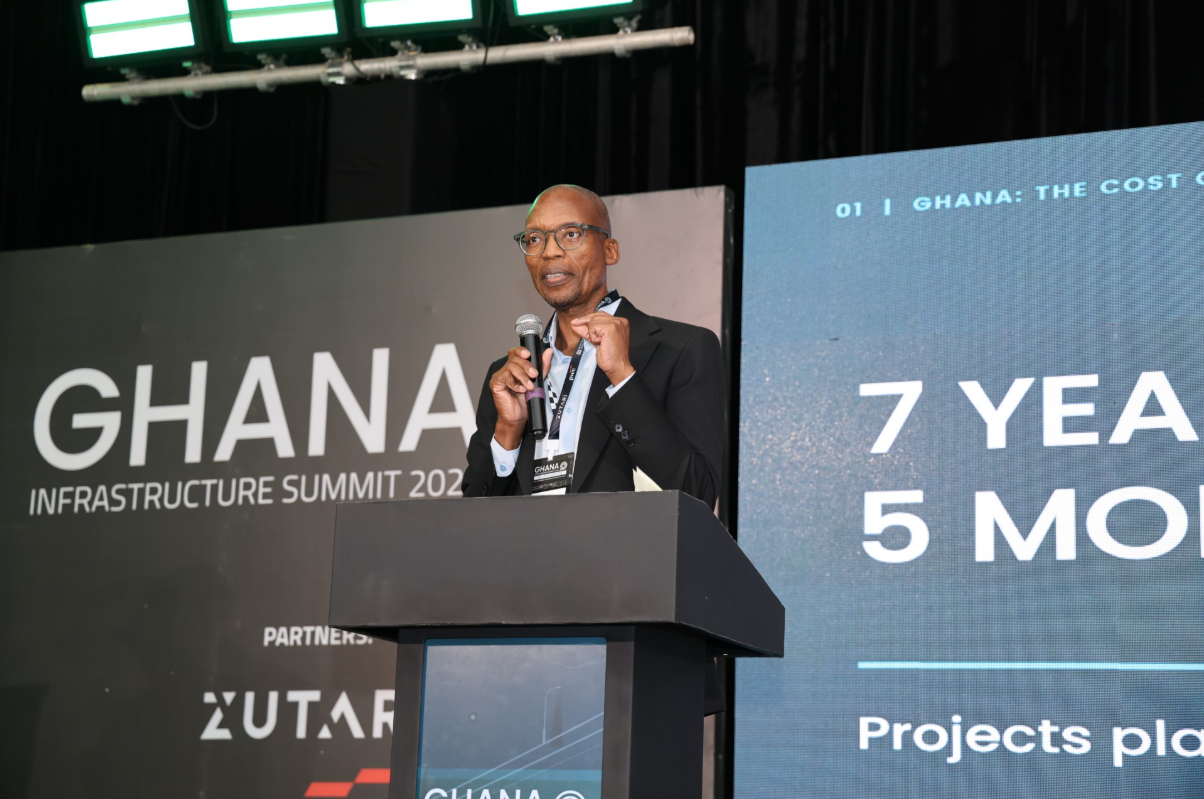
On 22 October 2026, Zutari convened the inaugural Ghana Infrastructure Summit with PwC Ghana and Bentsi-Enchill, Letsa & Ankomah. We brought government, investment, engineering, legal, and business perspectives into one conversation because infrastructure decisions cannot be made well in isolation.
Government must lead national investment priorities. But even the best-advised government can only consider the perspectives brought before it. Too often, those views arrive separately, after important assumptions are already established.
We did not convene another room to agree on problems we already recognise. A useful forum must challenge assumptions, improve choices and help remove obstacles to worthwhile investments.
We intend to sustain that dialogue, returning each time to three questions: Which decisions have improved? Which obstacles have been removed? And which worthwhile investments have moved closer to delivery?
The summit must earn its place through the changes it makes between meetings, rather than become another event on the infrastructure calendar.
The same standard applies to Zutari. Our work across Ghana and the wider continent has reinforced a lesson: even excellent engineering achieves little if financing, institutions and operating arrangements cannot support it. We apply that lesson early, when assumptions can still be challenged, and choices can still be shaped.
Sometimes that means saying, “Not yet” or “Not in this form.” But our responsibility does not

